

Explanation, Method Advantages
Are you tired of being under the pressure of debt? Do not despair. The Debt Avalanche Method can help you manage your debt more effectively by putting the most expensive debts first.
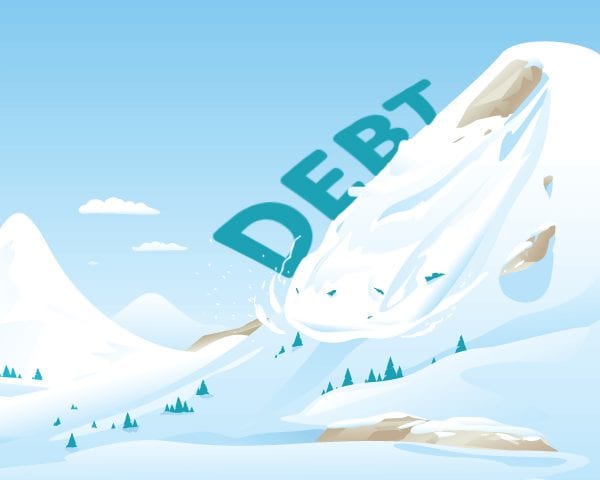
What is a debt avalanche?
The Debt Avalanche Method is a debt repayment strategy that involves prioritizing the repayment of high-interest debt first. Under this strategy, you make minimum payments on all your debts while directing any extra money toward the debt with the highest interest rate.
Once the highest-interest debt is fully paid off, you move on to the debt with the next highest interest rate and repeat the process until all your debts are paid off. This approach can help you save money on interest charges over the long run and potentially pay off your debts faster.
The debt avalanche method differs from the debt snowball method, which involves paying off the smallest debts first, regardless of interest rate.
Debt Avalanche Method
The debt avalanche method begins with the debt carrying the highest interest rate and working your way down. The more you can place toward principal repayment, the less interest you must pay.
The goal is to reduce your overall loan balance eventually. Hence, you still want to pay the minimum for your other obligations.
The debt avalanche method: An Explanation
Let’s learn more about the debt avalanche method.
You can initiate the debt avalanche method in a few easy stages.
Take into account all of your debts. List each debt object under the following headings:
- Credit cards
- Personal Loans
- Student loans
- Auto loans
- Personal loans
- Outstanding bills
- Medical debt
List The Debts In Order Of Greatest Interest Rate First
List the total sum of each debt you have, the minimum monthly payment due, the interest rate, and the creditor. List the dates that funds are expected as well.
Sort the list from the debt with the greatest interest rate to the debt with the lowest interest rate. Then, your attention will be on paying off the loan with the highest interest rate first. Pay the minimum amounts owed on all your debts in the interim to safeguard your credit score and avoid falling behind on payments.
Pay off the debt with the highest interest rate if you have any spare money. You’ll continue doing this until you fully pay the highest-interest loan.
Keep Going Until Your Debt Is Gone
Pay off your highest-interest debt first, then proceed to your next one. As you are only required to make minimum payments on your settled debts, put more money toward each new debt. As your balance falls and ultimately is paid in full, update your list every month.
Benefits Of The Debt Avalanche Method
As long as you follow the plan, the debt avalanche technique of debt repayment has the benefit of reducing the amount of interest you pay while working toward debt freedom. Because less interest accrues, it also reduces the time it takes to pay off debt, presuming consistent payments.
The compounding frequency determines the rate at which compound interest accumulates; the more compounding times, the higher the compound interest. While interest on loans can accrue monthly, semi-annually, or annually, it typically compounds daily on credit card balances.
Important Lessons:
- For those who can persevere, the debt avalanche is a systematic approach to eliminate debt quickly and affordably.
- A debt avalanche involves paying the minimum amount due on all sources of debt and then using any leftover funds to make additional payments on the debts with the highest interest rates.
It Helps, but It’s Not for Everyone
The debt avalanche technique of paying down debt is not for everyone. For instance, it requires much self-control, sufficient funds for everyday living expenses, and additional funds in the bank for emergencies. However, for those who can persevere, a debt avalanche can be a good method to get out of debt quickly and affordably.
Comparable To A Debt Snowball But Not The Same
The debt avalanche is not the same as the debt snowball, and another fast-tracks debt repayment strategy. In debt Snowball, the debtor uses extra funds to pay off obligations to increase the balance, starting with the smallest. The debt snowball method motivates by paying off a few minor debts, even though it is more expensive overall in terms of interest charges.
The Bottom Line
Programs for paying off debt, such as the debt snowball or debt avalanche methods, are not inherently superior to other choices. You might discover that a different approach—such as a balance shift credit card, debt consolidation loan, or debt management program—is more appropriate. Make sure to select the alternative that fits your lifestyle and budget the best.